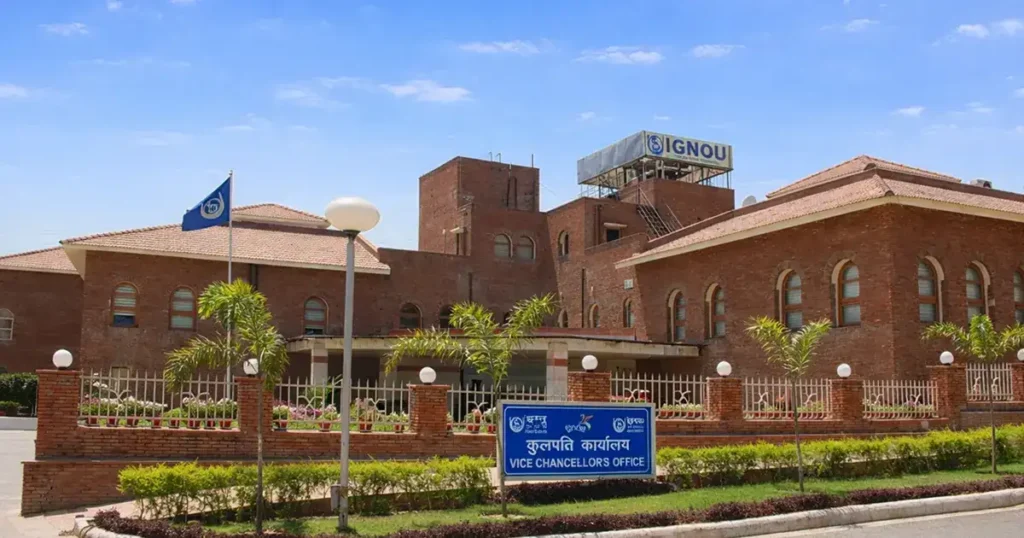
IGNOU remains one of the most trusted names for flexible higher education in India, but the actual IGNOU degree process confuses a lot of first-time applicants. Let’s simplify it properly.
Why IGNOU Still Matters in 2026
Despite the boom in private online learning platforms, IGNOU holds something those platforms don’t — UGC recognition equivalent to regular degrees, at a fraction of the cost. That combination is genuinely hard to beat for working professionals or students needing flexibility.
Quick answer: The IGNOU degree process involves online registration through the official portal, choosing a program and study center, submitting scanned documents, and paying program-specific fees, which typically range from ₹6,000 to ₹25,000 per year depending on the course.
Step 1: Choose Your Program
IGNOU offers everything from BA, B.Com, and BSc to specialized diplomas and postgraduate programs. Check program-specific eligibility criteria carefully — some postgraduate programs require specific undergraduate backgrounds.
Step 2: Online Registration Process
- Visit the official IGNOU admission portal
- Register with basic personal details and create login credentials
- Fill in the program selection form
- Upload scanned documents (mark sheets, ID proof, photo, signature)
- Pay the program fee online
- Download the confirmation and keep it safe
Step 3: Document Requirements
- Class 10 and 12 mark sheets (or equivalent qualifying degree for PG programs)
- Category certificate, if applicable
- Passport-size photograph and signature scan
- Address proof and identity proof
Fee Structure by Program Type
Quick answer: IGNOU fees vary by program — undergraduate programs like BA or B.Com typically cost ₹6,000-10,000 per year, while professional programs like BCA or MBA can range from ₹15,000-25,000 annually, significantly lower than most private university equivalents.
- Bachelor’s programs (BA, B.Com, B.Sc): ₹6,000-10,000/year
- Master’s programs (MA, M.Com): ₹8,000-15,000/year
- Professional programs (BCA, MBA): ₹15,000-25,000/year
- Diploma and certificate courses: ₹2,000-8,000 total
Study Material and Learning Format
IGNOU provides printed study material by post, along with access to eGyankosh (their digital repository). Some programs also include limited counselling sessions at regional study centers, though attendance requirements are generally flexible compared to regular colleges.
Exam Pattern and Assignment Submission
Students submit Term-End Assignments (TEE) before appearing for term-end examinations, held twice yearly (June and December). Missing assignment deadlines can delay your semester, so tracking these dates carefully matters.
Common Mistakes Applicants Make
- Missing the assignment submission deadline, which delays exam eligibility
- Not verifying study center location before finalizing registration
- Assuming digital study material fully replaces printed material without checking program-specific requirements
- Ignoring re-registration deadlines for subsequent semesters
FAQ
Q1. Is an IGNOU degree valid for government jobs? Yes, IGNOU degrees are UGC-recognized and accepted for government job eligibility and further higher education admissions.
Q2. How long does an IGNOU bachelor’s degree take to complete? Typically 3 years minimum, though IGNOU allows extended timelines up to 6 years for most undergraduate programs.
Q3. Can I pursue IGNOU while working full-time? Yes, this is actually one of its biggest advantages — flexible study pace designed specifically for working professionals.
Q4. Are IGNOU exams difficult compared to regular university exams? Generally considered manageable with consistent study, since study material is comprehensive and past papers are widely available for practice.
Q5. What happens if I fail an IGNOU exam? You can reappear in the next term-end exam cycle without major penalty, though it may extend your overall completion timeline slightly.
Conclusion
The IGNOU degree process is genuinely straightforward once you understand the registration steps and fee structure clearly. [link to related guide about distance education while working here] For working professionals or students needing flexibility, it remains one of the most affordable, credible options available in India today.