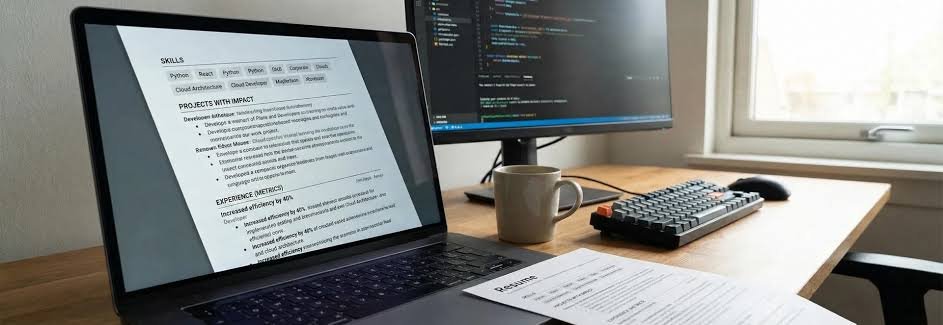
You’ve applied to twenty jobs this month. Maybe more. And the silence is deafening. Before blaming the job market entirely, it’s worth asking — do you actually know how to write a resume that gets past the first filter?
The Six-Second Truth
Recruiters spend, on average, about 6-7 seconds on a first resume scan. That’s not a myth, it’s been shown repeatedly in hiring studies. If your resume doesn’t communicate value instantly, it gets skipped.
Quick answer: To write a resume that gets interview calls, keep it to one page, lead with measurable achievements instead of duties, use a clean format without graphics, and tailor keywords to match the job description exactly.
Structure That Actually Works
- Header — name, phone, email, LinkedIn (no need for a photo in India for most roles)
- Professional summary — 2-3 lines, not a paragraph
- Work experience — reverse chronological
- Skills section — specific, not generic
- Education
- Certifications or projects, if relevant
Stop Writing Duties. Start Writing Results.
This is probably the biggest mistake I see. People write “Responsible for managing social media accounts” instead of “Grew Instagram engagement by 40% in 6 months through content strategy changes.”
See the difference? One sounds like a job description. The other sounds like proof.
Formatting Rules Recruiters Actually Care About
- Stick to one font, maximum two sizes for headings vs body
- Avoid tables and columns if applying through ATS-based portals — many systems can’t parse them properly
- Use bullet points, not long paragraphs
- Keep margins reasonable — don’t shrink text just to fit more content
Should You Include a Photo or Objective Statement?
Honestly, skip both in most cases. Objective statements (“Seeking a challenging role to utilize my skills…”) sound outdated and say nothing specific. A sharp summary line does far more work.
Tailoring for Each Application
Quick answer: Tailoring a resume means adjusting the skills section and summary line to mirror the exact keywords used in the job posting, without lying about your experience. This alone can significantly improve ATS pass-through rates.
Picture this — a marketing job posting mentions “performance marketing” five times, but your resume says “digital marketing” throughout. An automated screening system might not connect the two terms. Small language mismatches genuinely cost people interviews.
Common Resume Mistakes to Avoid
- Listing every single job since college, even irrelevant ones
- Using clichés like “hardworking, team player, go-getter” with no proof behind them
- Grammatical errors — even one typo can create doubt about attention to detail
- Sending the same resume to every job without any customization
What About Career Gaps?
Address them briefly and honestly in a cover letter or summary line if needed, but don’t over-explain in the resume itself. Employers care more about what you did during the gap (courses, freelancing, caregiving) than the gap existing at all.
FAQ
Q1. How long should a resume be? One page for freshers and most mid-level professionals; two pages max for senior roles with 10+ years of experience.
Q2. Should I use a resume template from Canva or Word? Simple templates are fine, but avoid heavily designed ones with icons and graphics if you’re applying through large company ATS systems.
Q3. Do I need a different resume for every job? Not entirely different, but tailoring the summary and top skills to match each job description makes a real difference.
Q4. Is it okay to lie slightly on a resume? No — exaggeration is fine to an extent, but outright lying about skills or roles almost always gets caught during interviews.
Q5. Should freshers include college projects? Absolutely, especially if they’re relevant to the job. Projects often substitute for lack of work experience quite effectively.
Conclusion
Learning how to write a resume properly isn’t about fancy design — it’s about clarity, proof, and relevance to the specific job. Rewrite your resume with results-focused language, tailor it per application, and you’ll likely notice a real difference in callback rates within a few weeks.